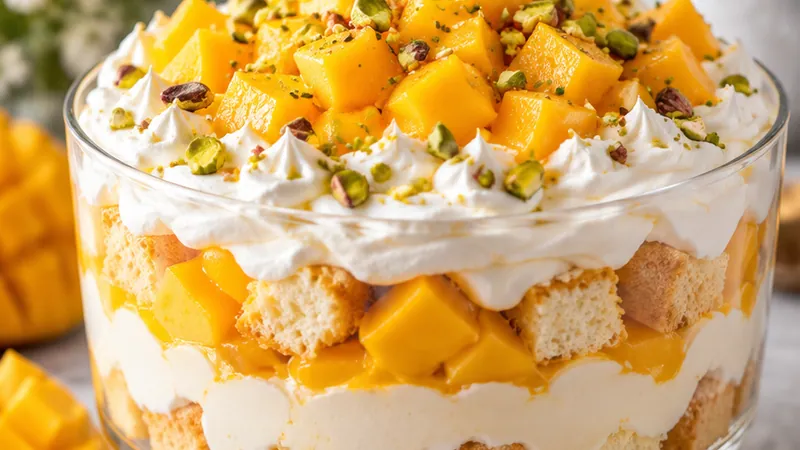

This orange custard is glossy, tender, and quietly fragrant, with a gentle sweetness and lively citrus perfume that lingers on the spoon.
I like to make it on weekend afternoons when the kitchen feels calm, serving it with a simple butter cookie or a slice of pound cake for company.
 Save
SaveOne spoonful and you will feel like you are taking a small sunny vacation right at home.
Orange Custard Recipe
Ingredients
Custard
Optional garnish
Instructions
- Preheat oven and prep a water bath
Preheat your oven to 325 degrees Fahrenheit. Place a deep roasting pan on the bottom rack and set it aside. In a medium bowl whisk together eggs, sugar, and salt until the mixture turns pale and slightly frothy.
- Warm the milk and cream
In a saucepan, combine the milk and heavy cream with the vanilla extract. Warm over medium low heat, stirring occasionally, just until tiny bubbles form around the edges and the mixture smells fragrant, do not boil.
- Stir in orange flavor
Remove the pan from the heat and immediately whisk in the orange zest and orange juice. Let the mixture sit for a minute so the orange aroma blooms.
- Combine egg and milk mixtures
Very slowly pour the warm cream mixture into the egg mixture while whisking constantly. As you pour, you will see a silky ribbon form and the mixture will turn smooth.
- Strain for extra silkiness
Pour the custard through a fine mesh sieve into a measuring cup or pitcher. This step catches any bits of cooked egg and gives the custard a perfectly smooth texture.
- Fill oven proof dishes
Lightly butter six ovenproof ramekins or cups. Ladle the custard into each dish, filling almost to the top. Place the ramekins carefully into the roasting pan.
- Bake in a water bath
Carefully pour hot water into the roasting pan until it comes about halfway up the sides of the ramekins. Slide the rack into the oven and bake for 25 to 30 minutes, until the custards are set around the edges but still wobble slightly in the center.
- Cool and chill
Remove the ramekins from the water bath and let them sit at room temperature for 10 minutes. Then cover and refrigerate for at least 2 hours, or until fully chilled and set.
- Unmold and garnish
Run a thin knife around the edge of each ramekin to loosen the custard. Place a small plate over the ramekin, flip carefully, and tap to release. Top with a sprinkle of orange zest, a few mint leaves, and a slice of orange if you like.
- Serve and enjoy
Serve the chilled orange custard as a light dessert or alongside a simple cake. Keep any leftovers covered in the refrigerator for up to three days.
Substitutions and variations
- Use coconut milk instead of heavy cream for a dairy free version with a subtle tropical note.
- Replace granulated sugar with honey or maple syrup, and reduce the milk slightly to keep the right thickness.
- Swap orange for lemon or lime to create a softly tart citrus custard.
- Use a teaspoon of vanilla bean paste if you do not have pure vanilla extract.
Chloe's tips
- Use a mix of Valencia and navel oranges for the best balance of sweet juice and fragrant zest.
- Take your time warming the milk; overheating can give the custard a scorched taste.
- For extra insurance against curdling, you can add a tablespoon of cornstarch to the egg sugar mixture and whisk well before adding the milk.
- Let the custard chill slowly in the fridge; rapid freezing can create ice crystals that affect texture.
How to store it
- Store in an airtight container in the refrigerator for up to 3 days.
- Avoid freezing, as the texture may become grainy once thawed.
Serving suggestions
Serve these chilled orange custards as a light dessert or a bright ending to any dinner.
- Place one custard in a small glass or on a dessert plate.
- Garnish with fresh mint and a twist of orange zest.
- Pair with a buttery shortbread cookie for a lovely contrast of flavors.

Frequently asked questions
Why did my custard turn out watery
This usually means the custard did not bake long enough or the oven temperature was too low. The edges should be set while the center still jiggles slightly. Bake a few minutes longer next time and make sure your water bath is hot so the custard cooks gently and evenly.
Can I make this in a larger baking dish instead of ramekins
Yes, you can use a shallow ovenproof dish and bake until the center is just set. You may need to add a few extra minutes to the baking time and check doneness by gently shaking the dish.
Is it okay to skip the water bath
The water bath helps the custard cook gently and lowers the risk of cracking. If you must skip it, lower the oven further to 300 degrees Fahrenheit, bake slowly, and check doneness early.
How do I know when the custard is done
The custard is done when the edges look set but the center still trembles slightly when you gently shake the ramekin. It will continue to set as it cools and chill.
Let's get cooking!
I hope you enjoy making this gentle orange custard and sharing it with the people you love. It is a simple dessert that feels special, and once you master the basics you will want to experiment with different citrus twists again and again.