
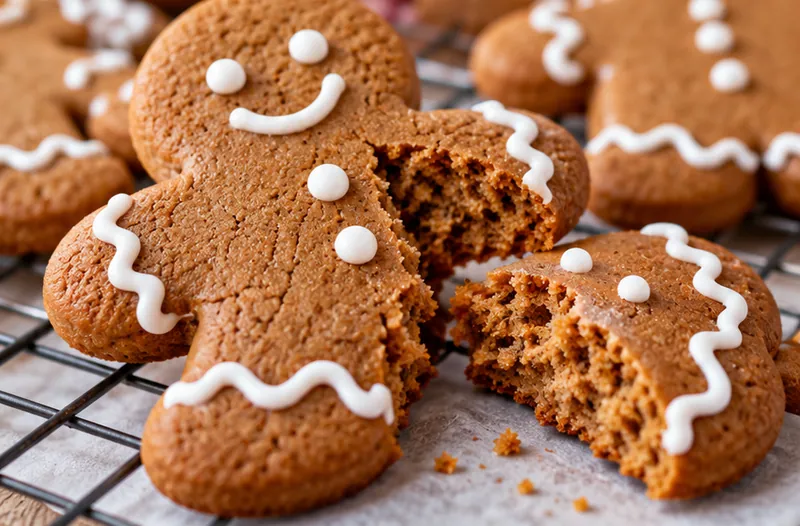
There is something about the smell of gingerbread baking that makes the whole house feel like the holidays. Warm ginger, sweet cinnamon, and a whisper of cloves drift out of the oven while the dark molasses dough puffs into soft, thick cookies with gently crackled edges. One bite and you get a tender, almost cake-like center with just enough chew, nothing like the hard, snappy gingerbread you might remember from childhood.
These are the cookies I make every December for cookie swaps, teacher gifts, and lazy weekend decorating sessions. The dough is easy to handle once it chills, it holds its shape beautifully in the oven, and the cookies stay soft for days in a sealed container. Roll them a little thicker than you think you should, pull them from the oven while the centers still look slightly underdone, and you will be rewarded with the softest gingerbread people you have ever made.
 Save
My favorite part is the decorating. I set out a bowl of simple vanilla icing, a few piping bags, and a pile of sprinkles, and everyone gathers around the kitchen table. Some cookies end up elegant, most end up wonderfully goofy, and every single one gets eaten. If you have been searching for a gingerbread cookie that tastes as cozy as it smells, this is the one to bookmark.
Soft Gingerbread Cookies
Ingredients
Gingerbread Dough
Vanilla Icing
Instructions
- Whisk the Dry Ingredients
In a medium bowl, whisk together the flour, ground ginger, cinnamon, cloves, nutmeg, baking soda, and salt until the spices are evenly distributed and no streaks remain. Set the bowl aside.
- Cream the Butter and Sugar
In a large bowl, beat the softened butter and dark brown sugar with a hand mixer or stand mixer on medium speed for about 2 minutes, until the mixture looks lighter in color and fluffy. Scrape down the sides of the bowl with a spatula.
- Add the Molasses, Egg, and Vanilla
Pour in the molasses and beat on medium speed until smooth and glossy. Add the egg and 1 teaspoon vanilla and beat for another 30 seconds until fully combined. The mixture may look slightly curdled at first, which is normal; it will come together once the flour goes in.
- Mix the Dough
Reduce the mixer speed to low and add the dry ingredients in three additions, mixing just until no dry flour remains after each one. The dough will be soft and sticky, similar to thick peanut butter. Avoid overmixing, which can make the cookies tough.
- Chill the Dough
Divide the dough in half, flatten each piece into a disk about 1 inch thick, and wrap each tightly in plastic wrap. Refrigerate for at least 2 hours, or up to 3 days. Chilling firms up the butter so the dough is easy to roll and the cookies keep their shape.
- Preheat and Prepare the Pans
When you are ready to bake, place a rack in the center of the oven and preheat to 350°F. Line two baking sheets with parchment paper or silicone baking mats.
- Roll Out the Dough
Lightly flour your work surface and rolling pin. Take one disk of dough from the refrigerator and let it sit for 5 minutes so it does not crack. Roll it out to an even 1/4-inch thickness, lifting and turning the dough occasionally and dusting with a little more flour if it starts to stick.
- Cut Out the Cookies
Cut shapes with a 3-inch gingerbread person or other cookie cutter, dipping the cutter in flour between cuts. Transfer the cookies to the prepared baking sheet, spacing them about 1 inch apart. Gather the scraps, reroll once, and cut more cookies, then repeat with the second disk of dough.
- Bake Until Just Set
Bake one sheet at a time for 8 to 9 minutes, until the edges are set and the centers look puffy and slightly underbaked. Do not wait for the centers to firm up in the oven; they finish setting as they cool, and pulling them early is the secret to soft cookies.
- Cool the Cookies
Let the cookies rest on the baking sheet for 5 minutes, then move them to a wire rack to cool completely, about 30 minutes. Bake the second sheet while the first batch cools, making sure the pan is not hot before adding more dough.
- Make the Icing and Decorate
In a small bowl, whisk the powdered sugar, 2 tablespoons milk, and 1/2 teaspoon vanilla until smooth. Add more milk, a teaspoon at a time, until the icing is thick but pipeable. Spoon it into a piping bag or a zip-top bag with a tiny corner snipped off, decorate the completely cooled cookies, and let the icing set for about 1 hour before stacking.
Substitutions and variations
- Light brown sugar works in place of dark brown sugar, though the cookies will taste slightly less rich and caramel-like.
- For a dairy-free version, use a plant-based butter stick and swap the milk in the icing for oat or almond milk.
- Avoid blackstrap molasses, which is bitter and strong; if that is all you have, use 1/4 cup blackstrap plus 1/4 cup honey or maple syrup.
- Add 1/4 teaspoon finely ground black pepper or allspice to the dry ingredients if you like an extra spicy kick.
Chloe's tips
- Measure flour by spooning it into the cup and leveling it off; scooping straight from the bag packs in extra flour and makes dry cookies.
- Keep the dough at 1/4 inch thick or slightly thicker for the softest texture; thinner cookies bake up crisp.
- If the dough gets warm and sticky while you work, slide it back into the refrigerator for 10 minutes.
- Check your spices for freshness; ground ginger and cinnamon lose their punch after about a year.
How to store it
- Store cooled, iced cookies in an airtight container at room temperature for up to 5 days, with parchment between layers.
- Add a slice of bread to the container to help the cookies stay soft; replace it when it dries out.
- Freeze undecorated baked cookies in a freezer bag for up to 3 months and thaw at room temperature before icing.
- The wrapped dough disks can be frozen for up to 3 months; thaw overnight in the refrigerator before rolling.
Serving suggestions
These cozy cookies fit right into any holiday gathering.
- With a mug of hot cocoa or a creamy eggnog latte
- Packed in a tin with ribbon as a homemade holiday gift
- On a Christmas cookie platter alongside sugar cookies and snickerdoodles
- Set out undecorated with icing and sprinkles for a kids decorating party
Frequently asked questions
Why are my gingerbread cookies hard instead of soft?
Hard gingerbread usually comes from overbaking, rolling the dough too thin, or adding too much flour. Roll the dough to 1/4 inch, measure flour carefully, and take the cookies out when the centers still look slightly puffy and soft.
Can I make the dough ahead of time?
Yes. The dough keeps well wrapped in the refrigerator for up to 3 days or in the freezer for up to 3 months, which makes it easy to spread holiday baking over several days.
Do I have to chill the dough?
Chilling is important for this recipe. The dough is too soft to roll and cut right after mixing, and chilled dough spreads less in the oven, so your shapes stay sharp and the cookies bake up thick.
What kind of molasses should I use?
Use regular unsulphured molasses, such as a mild or full-flavored variety from the baking aisle. Blackstrap molasses is much stronger and more bitter and can overpower the spices.
Let's get cooking!
Once you try these soft gingerbread cookies, they may just become your new holiday tradition. The dough comes together quickly, the spices fill your kitchen with the coziest aroma, and the tender centers win over even the folks who claim they do not like gingerbread. So grab your cookie cutters, invite a few helpers into the kitchen, and enjoy every sweet, spiced bite of the season.