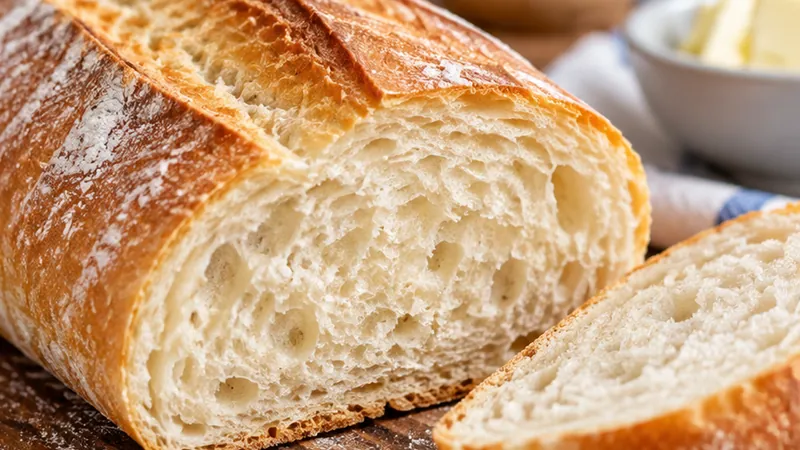
Warm, buttery, and cloud-soft, this French bread fills your kitchen with a comforting yeasty aroma and a tender crumb that melts in your mouth, making every slice feel like a little slice of Paris.
This recipe is perfect for relaxed weekend bakers who want impressive results without stress, and it shines when enjoyed fresh from the oven with a cup of coffee or spread with your favorite toppings.
 Save
SaveI first made this loaf on a rainy afternoon and was amazed at how the simple ingredients came together into a billowy, golden beauty that kept everyone coming back for seconds.
Soft Fluffy French Bread Recipe
Ingredients
Dough
Optional Topping
Instructions
- Activate the yeast
In a small bowl, combine warm water, sugar, and yeast, let sit 5 to 10 minutes until frothy, then stir in milk and olive oil.
- Mix the dough
In a large mixing bowl, whisk flour and salt, make a well in the center, pour in the wet ingredients, and stir with a spoon or dough hook until a shaggy dough forms.
- First gentle rise
Cover the bowl with a damp cloth or lid, let it rise in a warm place for 60 to 90 minutes, or until noticeably puffed and about doubled in size.
- Shape the loaf
Turn the dough onto a floured surface, gently press out air, fold edges into center, and shape into a smooth, tight loaf about 9 inches long.
- Second relaxed proof
Place the shaped loaf seam side down on a parchment-lined tray, cover, and let rise 45 to 60 minutes until pillowy and ready to spring back.
- Preheat and prepare
Position an oven rack in the center, preheat to 425°F (220°C), place a Dutch oven or baking stone inside to heat, and prepare an oven-safe bowl of hot water for steam.
- Score and steam
Transfer the loaf (on parchment if needed) to the hot surface, quickly score the top, cover with a lid or Dutch oven if using, then carefully add hot water to create a steamy environment.
- Bake covered
Bake covered for 20 minutes so steam helps the crumb set and rise, then remove the lid and bake another 10 to 12 minutes until deep golden brown.
- Cool completely
Let the bread rest on a wire rack for at least 30 minutes before slicing so the interior firms and flavors develop fully.
- Serve and store
Serve warm with butter, and keep in an airtight container at room temperature for up to 3 days or freeze for longer storage.
Substitutions and variations
- You can use bread flour for a slightly chewier crumb or all-purpose flour for a softer texture.
- If you prefer dairy-free, swap the milk for an equal amount of warm water and use olive oil instead of butter.
- Active dry yeast works well, but you can use instant yeast by reducing the amount to 2 teaspoons and skipping the blooming step.
- A Dutch oven can substitute for steam in the oven if you do not have a spray bottle.
Chloe's tips
- Keep your kitchen warm for a more relaxed proof by placing the dough near a slightly warm oven or using a microwave with a mug of hot water.
- Do not skip the cool down, because cutting too soon can lead to gummy texture and collapsed pockets.
- For extra softness, brush the baked loaf lightly with butter as soon as it comes out of the oven.
- If you love a crisp crust, uncover the loaf for the last few minutes and let it brown a little more.
How to store it
- Room temperature: store in an airtight container or a cloth bag for up to 3 days.
- Freezer: wrap tightly and freeze for up to 3 months; thaw at room temperature or reheat in a 350°F oven for a few minutes.
- Reheating: refresh slices in a 350°F oven for 5 to 7 minutes to restore that fresh-from-oven softness.
Serving suggestions
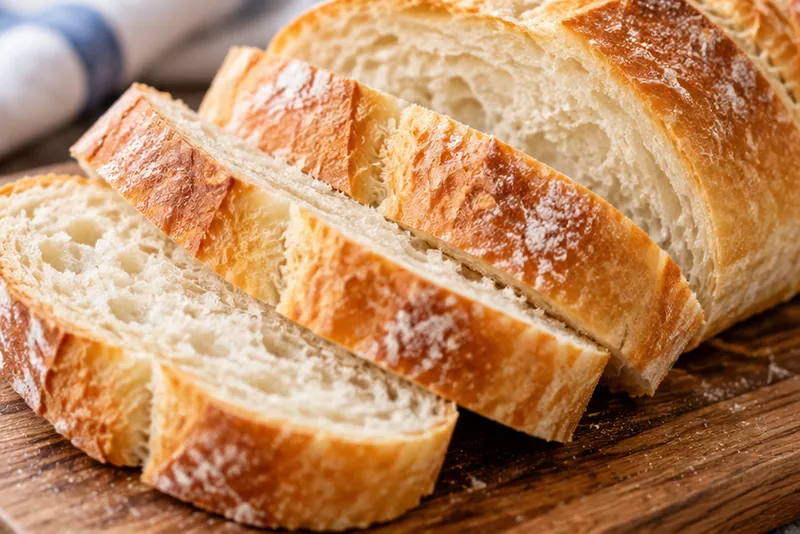
Slice this beauty and enjoy it at its peak with simple accompaniments that highlight the soft, fluffy texture and gentle sweetness.
- Spread with salted butter and a drizzle of honey
- Serve alongside a bowl of soup or a fresh green salad
- Make classic French toast or grilled sandwiches the next morning
Frequently asked questions
Why did my bread turn out dense instead of fluffy?
Dense bread usually comes from under-proofing, over-kneading, or not enough steam, so try a slightly longer rise, a gentler touch when shaping, and steam in the oven for a better oven spring.
Can I make this in a regular loaf pan instead of free-form?
Yes, you can shape the dough into a loaf pan for a softer, more uniform crumb; just grease the pan and bake at the same temperature until golden and sounding hollow when tapped.
How do I know when the loaf is fully baked?
The bread is done when the crust is deep golden brown, it sounds hollow when tapped, and an instant-read thermometer registers around 190 to 210°F.
Can I use whole wheat flour instead of all-purpose?
You can swap in whole wheat flour, but add a little extra water and expect a slightly denser, nuttier loaf with a heartier texture.
Let's get cooking!
With a relaxed rise, gentle handling, and a touch of steam, you can enjoy bakery-style softness in your own kitchen, so slice, savor, and celebrate your homemade French bread masterpiece.