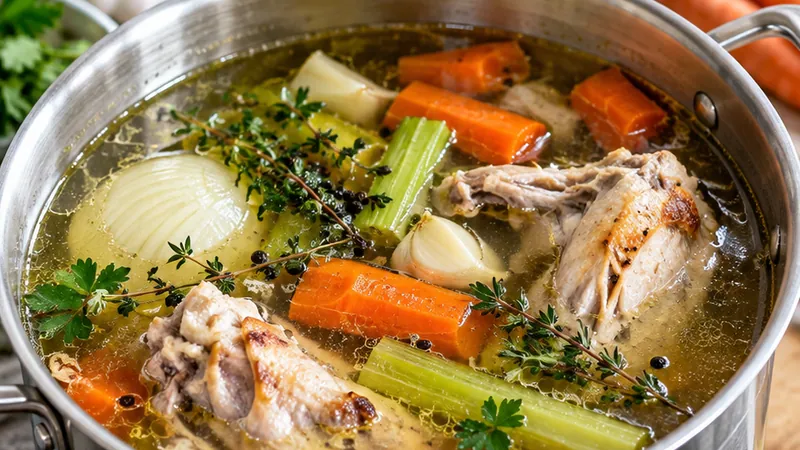
This gentle simmering kitchen ritual fills the house with a warm, savory aroma as vegetables and herbs slowly perfume the water, turning simple chicken bones into a golden, flavorful base you can feel good about using all week.
You will want to make it on a relaxed weekend or when you are meal prepping, because it is a versatile foundation that stretches a roast chicken dinner into multiple delicious meals and keeps your fridge stocked with ready-to-use broth.
 Save
SaveI love how a pot of homemade stock turns weeknight noodles and quick pan sauces into something that tastes like you spent all day in a restaurant, and it is deeply satisfying to create something so useful from what might otherwise be thrown away.
How To Make Chicken Stock Recipe
Ingredients
Stock Base
Finishing (optional)
Instructions
- Gather and Prepare Ingredients
Place the roasted chicken carcass, quartered onion, chopped carrots and celery, smashed garlic, thyme, bay leaf, peppercorns, and salt in a large stockpot, adding cold water to cover everything by about 1 to 2 inches.
- Bring to a Gentle Simmer
Set the pot over medium heat and slowly bring the mixture to a gentle simmer, skimming any foam or impurities that rise to the surface in the first 10 minutes.
- Simmer Partially Covered
Reduce the heat to maintain a very low simmer, partially cover the pot, and let it cook for 60 to 90 minutes so the flavors meld without boiling aggressively.
- Strain the Stock
Place a fine mesh strainer over a large bowl or another pot and carefully ladle the stock through, pressing lightly on the vegetables to extract the liquid while leaving solids behind.
- Cool and Store
Let the hot stock cool to room temperature, then transfer it to airtight containers, leaving a little headspace if you are freezing it.
- Chill and Skim (optional but recommended)
Refrigerate the stock for a few hours or overnight, then lift off the layer of solidified fat for a cleaner flavor if you prefer a leaner broth.
- Season to Taste
Before using, bring the strained stock back to a simmer and adjust the seasoning with a pinch of salt and freshly ground black pepper, adding a knob of butter for a silkier mouthfeel if desired.
- Use or Freeze
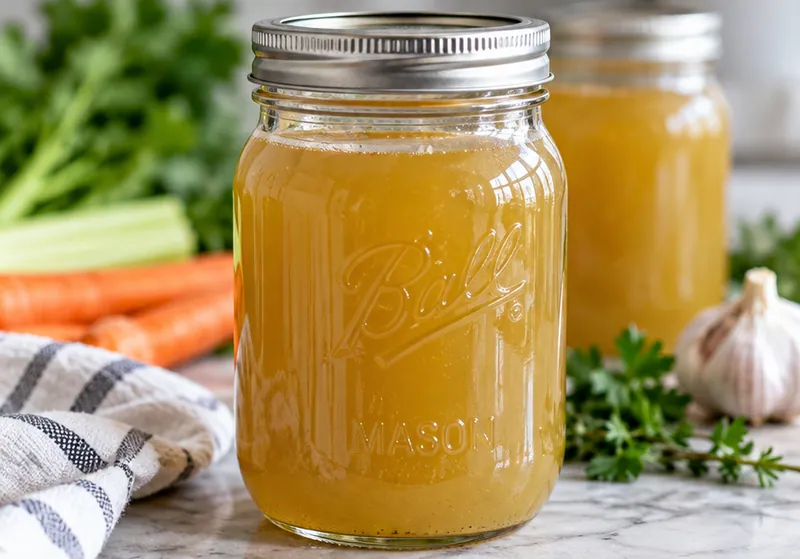
Portion the stock into containers, label them with the date, and freeze for up to 3 months, or keep in the fridge for 3 to 4 days and use in soups, sauces, or risotto.
- Repurpose the Solids
Spread the soft vegetables and chicken scraps on a baking sheet and roast until fragrant, then use them as a base for chicken salad or blend into a quick vegetable puree for soups.
- Taste and Adjust
Give the finished stock a final taste test, adjusting salt, pepper, or acidity with a splash of lemon juice so it is perfectly balanced for your dish.
Substitutions and variations
- Use a store-bought rotisserie chicken and remove the meat before simmering if you do not have a roasted carcass.
- Swap thyme for a bay leaf or a few sprigs of parsley if that is what you have on hand.
- Add a splash of dry white wine when you add the vegetables for extra depth of flavor.
- For a quicker batch, use 6 to 8 cups of store-bought low sodium broth and simmer with the vegetables for 30 minutes.
- Make this in a slow cooker by combining all ingredients and cooking on low for 6 to 8 hours, then strain.
Chloe's tips
- Use cold water to start so the stock gently extracts flavor rather than seizing the proteins.
- Skim foam early and maintain a low simmer for a clearer, more refined broth.
- Avoid adding the stock to a boiling pot, since vigorous boiling can make it cloudy.
- For deeper flavor, roast the vegetables and a few extra chicken bones before simmering.
- Label your containers with the date so you know when to use or freeze them.
How to store it
- Refrigerate in an airtight container for up to 4 days.
- Freeze in portion-sized containers or heavy-duty bags for up to 3 months.
- Thaw overnight in the fridge or warm gently in a saucepan before using.
Serving suggestions
This versatile stock is delicious on its own and an essential building block for many dishes.
- Sip it as a light, comforting starter with a sprinkle of fresh parsley.
- Use it to cook grains like rice or quinoa for extra savory side dishes.
- Deglaze a pan and transform pan juices into an instant sauce for roasted chicken or steak.
- Add it to homemade soups, stews, or chili for a richer, more balanced flavor.
Frequently asked questions
Can I make this stock in a slow cooker?
Yes, combine all ingredients in the slow cooker and cook on low for 6 to 8 hours, then strain and cool before storing.
How do I know when the stock is done?
The stock is ready when the vegetables are very soft, the chicken bones no longer release juice, and the liquid tastes richly seasoned.
Is it okay to freeze stock in glass jars?
It is best to leave about one inch of headspace in glass jars, since the stock will expand as it freezes, to prevent breakage.
How long does homemade stock keep in the fridge?
Stored in an airtight container, homemade chicken stock stays at peak quality for about 3 to 4 days in the refrigerator.
Let's get cooking!
Making chicken stock at home is easier and more rewarding than you might think, and you will love how it lifts every soup, sauce, and simmer you create, so save those carcasses and let your kitchen smell amazing all afternoon.