
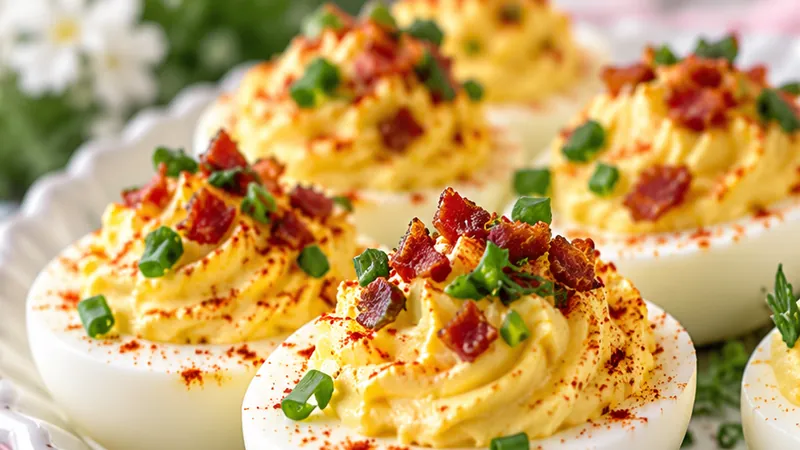
These Easter deviled eggs look like tiny works of art on the table. The whites are tinted in soft pink, lavender and sunny yellow using pantry staples like beet juice, red cabbage and turmeric, while the filling stays creamy, tangy and just a little zesty from Dijon and fresh lemon.
They are perfect for Easter brunch, spring potlucks, baby showers and any gathering where you want a make-ahead appetizer that disappears in minutes. The dye needs a little time to soak, but the work is hands-off, and you can finish the whole tray the day before the party.
 Save
In my family, the egg dyeing kit always came out the week before Easter, and I never wanted to waste a single pretty egg on a basket. Turning them into deviled eggs felt like the perfect way to enjoy the colors, and now my nieces fight over who gets to pipe the filling.
Easter Deviled Eggs
Ingredients
Eggs
Natural Dyes
Filling
Garnish
Instructions
- Cook the eggs
Place the 12 eggs in a single layer in a large pot and cover with cold water by 1 inch. Add 1 tablespoon of vinegar, which helps keep the whites firm if a shell cracks. Bring to a full boil over high heat, then turn off the heat, cover tightly and let the eggs sit for 12 minutes.
- Chill the eggs
Move the eggs to a large bowl filled with ice and cold water and let them cool for 15 minutes. Cold eggs peel more cleanly and slice without crumbling, so do not skip the ice bath.
- Make the dye baths
Prepare the three dyes while the eggs chill. Simmer the chopped red cabbage in 1 1/2 cups of water for 15 minutes, then strain. Stir the turmeric into 1 1/2 cups of hot water until dissolved. Warm the beet juice until hot to the touch. Pour each dye into its own tall glass or jar and stir 1 tablespoon of vinegar into each, then let them cool to room temperature.
- Peel and halve the eggs
Gently crack each egg all over and peel under a thin stream of cool water. Pat dry, then slice each egg in half lengthwise with a sharp knife, wiping the blade clean between cuts. Scoop the yolks into a medium bowl and set the whites aside on a plate.
- Dye the egg whites
Divide the egg white halves into three groups of 8 halves. Place one group in each dye bath so the whites are fully submerged. Soak for 30 to 45 minutes for pastel shades, checking now and then. Lift them out with a slotted spoon and set them cut side down on a paper towel to drain and dry.
- Mash the yolks
While the whites soak, mash the yolks with a fork until they look like fine crumbs. For an extra silky filling, press them through a fine mesh sieve with the back of a spoon. Smooth yolks are the secret to a filling that pipes beautifully.
- Mix the filling
Add the mayonnaise, sour cream, Dijon, lemon juice, vinegar, salt, pepper and smoked paprika to the yolks. Stir until completely smooth and creamy. Taste and add a little more salt or lemon juice if needed, remembering that the flavor mellows slightly once the filling chills.
- Chill the filling
Cover the bowl and refrigerate the filling for 20 minutes. A slightly chilled filling holds its shape better when piped and keeps the pretty ridges from drooping.
- Pipe the filling
Spoon the filling into a piping bag fitted with a large star tip, or into a zip-top bag with one corner snipped off. Pat the dyed whites dry once more, then pipe a generous swirl into each half, filling the hollow and building a little peak on top.
- Garnish and serve
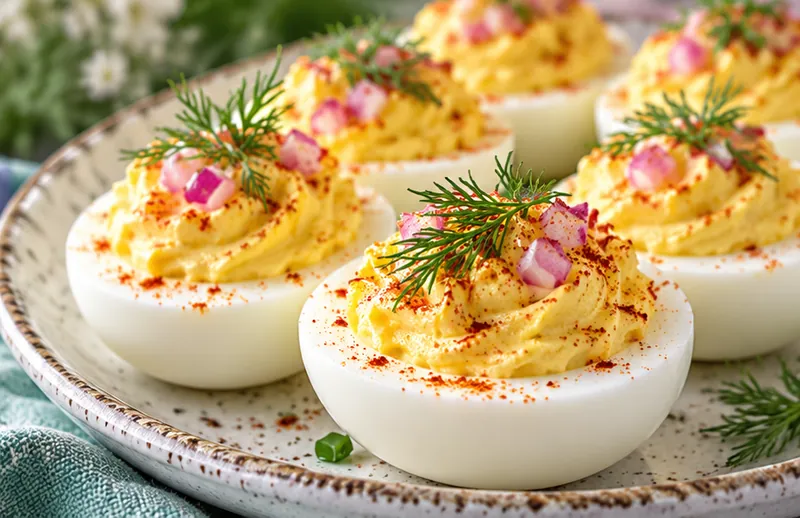
Sprinkle the eggs with chopped chives, tuck a small dill sprig onto each one, and add a few edible flower petals or microgreens for a spring look. Dust lightly with sweet paprika. Arrange on a platter and serve right away or keep chilled until the party starts.
Substitutions and variations
- Swap the sour cream for plain Greek yogurt if you want a lighter, tangier filling.
- If you do not have red cabbage, steep a few blueberries or a bag of hibiscus tea in hot water for a soft purple tint.
- Replace the Dijon with yellow mustard for a milder, more classic deviled egg flavor.
- For a savory twist, fold in 2 tablespoons of finely crumbled cooked bacon or chopped smoked salmon.
- Use gel food coloring in hot water with vinegar if you need brighter pastel shades in a hurry.
Chloe's tips
- Use eggs that are a week or two old, since very fresh eggs are much harder to peel cleanly.
- For deeper colors, soak the whites longer or chill the dye baths with the eggs in the refrigerator for a few hours.
- Rinse the dyed whites very briefly if you see streaks, then blot gently so the color stays even.
- Set a damp paper towel or a muffin tin under the platter to stop the eggs from sliding around while you carry them.
How to store it
- Store assembled eggs covered in the refrigerator for up to 24 hours for the best look and texture.
- For longer make-ahead prep, keep the dyed whites and the filling in separate airtight containers for up to 2 days, then pipe just before serving.
- Do not leave the eggs out at room temperature for more than 2 hours, and do not freeze them.
Serving suggestions
Present these colorful eggs as a showstopper alongside your favorite Easter spread.
- Nestle them in a bed of fresh greens or shredded lettuce for an edible nest.
- Serve them next to a glazed ham, roasted asparagus and warm dinner rolls.
- Set them out on a brunch board with smoked salmon, fresh fruit and crackers.
- Pack them in a deviled egg carrier for potlucks and family gatherings.
Frequently asked questions
How long do I need to soak the egg whites?
Thirty to forty-five minutes gives a soft pastel color, and an hour or more gives a deeper tone. Check them every 15 minutes so you get the shade you like.
Will the natural dyes change the flavor of the eggs?
Only very slightly. The vinegar adds a faint tang that actually pairs well with the creamy filling, and the soaking time is short enough that the beet, cabbage and turmeric flavors stay in the background.
Can I make Easter deviled eggs the day before?
Yes. Dye and dry the whites and make the filling a day ahead, store them separately, and pipe the filling shortly before serving so everything looks fresh.
Why do my egg whites have a green ring around the yolk?
That ring comes from overcooking. Letting the eggs sit in hot water off the heat for 12 minutes and then cooling them quickly in an ice bath prevents it.
Let's get cooking!
Whether you bring them to a big family brunch or make a small platter for a quiet spring morning, these pastel deviled eggs are sure to make everyone smile. Give them a try, have fun with the colors, and enjoy the little bit of Easter magic they add to your table.