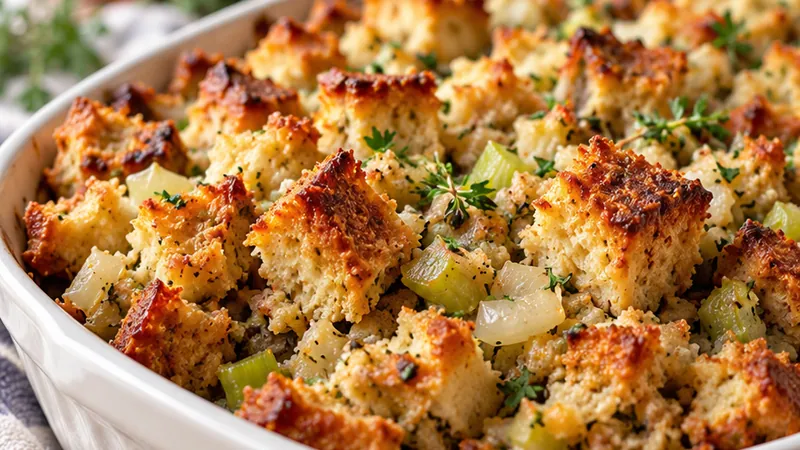
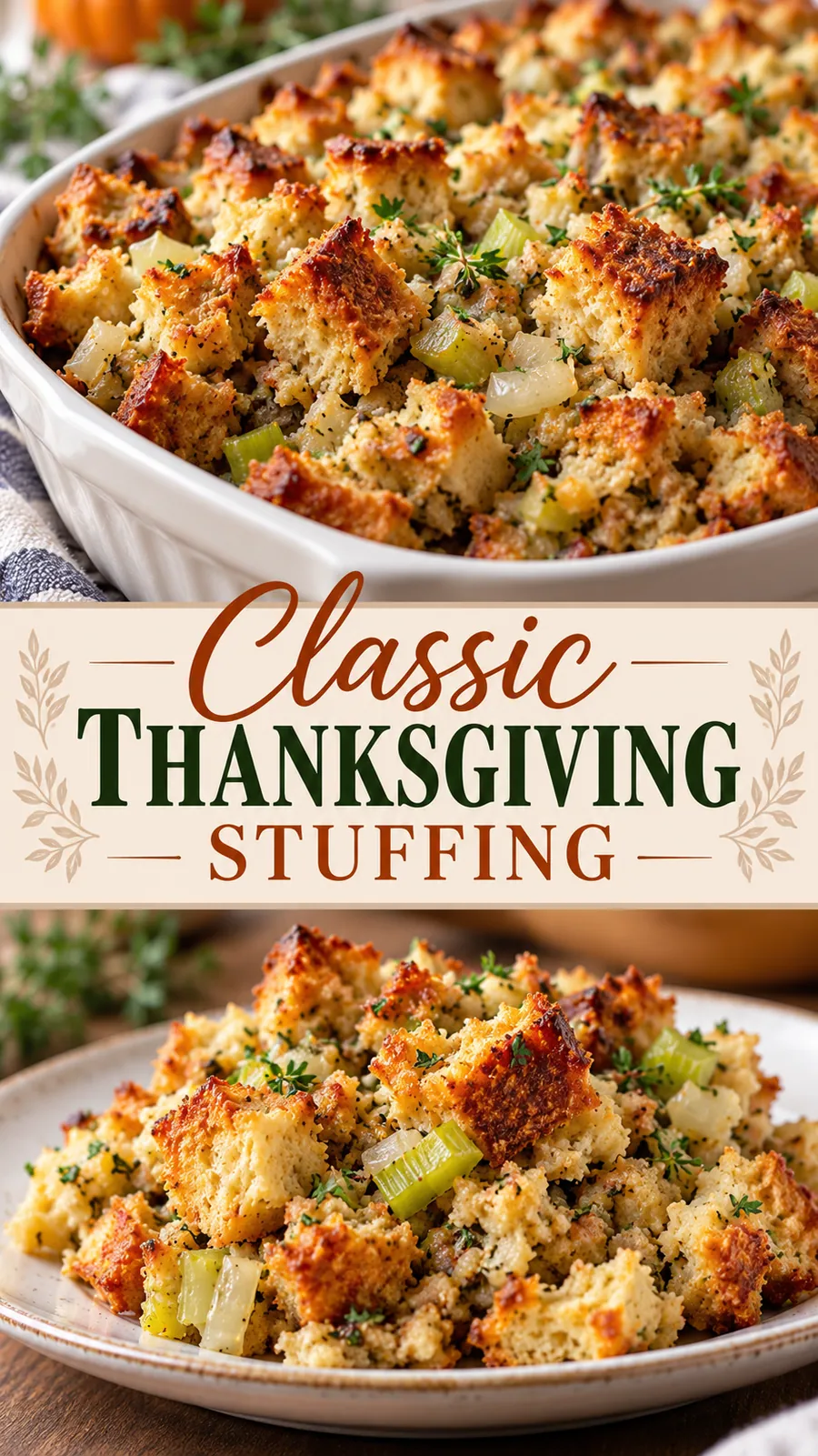
There is a moment every Thanksgiving when the kitchen fills with the smell of butter, onion, and sage melting together, and suddenly it really feels like the holiday. This stuffing is the reason. The bread cubes soak up a rich, herby broth, then bake until the edges turn crisp and golden while the middle stays soft, moist, and full of flavor.
Make this whenever you want a dependable, crowd-pleasing side that goes with turkey, ham, or roast chicken. Because it bakes in its own dish instead of inside the bird, it cooks evenly, it is safer, and you get far more of those crunchy corner pieces everyone fights over. You can also assemble it the day before, which frees up precious time and counter space on Thanksgiving morning.
 Save
If you grew up with stuffing from a box, this homemade version will feel like a delicious upgrade without being fussy. It uses simple pantry ingredients and fresh herbs, and the method is forgiving enough for a first-time host. My favorite part is sneaking a warm spoonful straight from the pan before anyone else sits down.
Classic Thanksgiving Stuffing
Ingredients
Bread
Vegetables and Herbs
Binding
Instructions
- Dry the bread cubes
Heat the oven to 300°F. Spread the bread cubes in a single layer on two large rimmed baking sheets and bake for 20 minutes, stirring halfway through, until they feel dry and lightly crisp but are not browned. Let them cool on the pans while you cook the vegetables, then transfer them to your largest mixing bowl.
- Prepare the baking dish
Raise the oven temperature to 350°F. Rub the 1 tablespoon of butter over the bottom and sides of a 9x13-inch baking dish so the stuffing releases easily and the edges get golden.
- Soften the onion and celery
Melt the 1/2 cup of butter in a large skillet over medium heat. Add the diced onion and celery and cook for 10 to 12 minutes, stirring now and then, until the vegetables are soft and translucent but not browned.
- Add the garlic and herbs
Stir in the garlic, sage, thyme, and rosemary and cook for about 1 minute, just until the kitchen smells wonderfully fragrant. Season with the kosher salt and black pepper, then remove the skillet from the heat.
- Combine the bread and vegetables
Scrape the buttery vegetable mixture over the bread cubes, making sure to get every bit of butter from the pan. Add the chopped parsley and toss gently with a large spoon until the bread is evenly coated.
- Whisk the broth and eggs
In a medium bowl, whisk the eggs until smooth, then slowly whisk in 2 1/2 cups of the warm broth. Adding the broth gradually keeps the eggs from scrambling.
- Moisten the stuffing
Pour the broth mixture over the bread and fold gently until all the liquid is absorbed. The bread should feel moist and hold together when squeezed, without any puddles at the bottom of the bowl. If it still feels dry in spots, add up to 1/2 cup more broth, a little at a time.
- Fill the baking dish
Spoon the stuffing into the prepared dish and spread it into an even layer without packing it down. A loose layer lets the heat circulate and gives you a lighter texture with a crispier top.
- Bake covered
Cover the dish tightly with aluminum foil and bake for 30 minutes. Covering it first lets the center heat through and set while staying soft and moist.
- Uncover and crisp the top
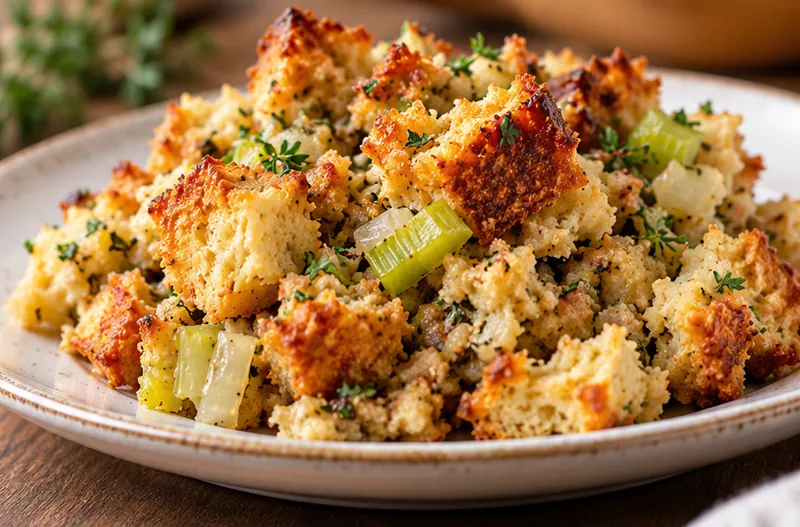
Remove the foil and bake for another 18 to 20 minutes, until the top is deep golden brown and crisp at the edges and an instant-read thermometer in the center reads 165°F. Let it stand for a few minutes before scooping and serving warm.
Substitutions and variations
- For a sausage stuffing, brown 1 pound of mild or sage breakfast sausage, drain it well, and fold it in with the vegetables.
- Swap the chicken broth for vegetable broth to make the stuffing vegetarian.
- Use cornbread for half of the bread cubes if you love a slightly sweet, crumbly Southern-style texture.
- If you do not have fresh herbs, use 2 teaspoons dried sage, 1 teaspoon dried thyme, and 1/2 teaspoon dried rosemary instead.
- Stir in 1 cup of dried cranberries and 3/4 cup of toasted chopped pecans for a sweet and nutty twist.
Chloe's tips
- Day-old bread works best because it absorbs the broth without turning mushy, and drying it in the oven makes even fresh bread behave the same way.
- Taste the vegetable mixture before adding the eggs and adjust the salt, since broth brands vary a lot in saltiness.
- Use a large, wide bowl for mixing so you can fold the bread gently without crushing the cubes.
- For extra crunchy edges, dot the top with 1 to 2 tablespoons of cold butter before the uncovered bake.
How to store it
- To make ahead, assemble the stuffing in the dish, cover, and refrigerate for up to 24 hours; add 10 to 15 minutes to the covered baking time.
- Store leftovers in an airtight container in the refrigerator for up to 4 days.
- Reheat portions at 350°F, covered with foil and sprinkled with a splash of broth, for 15 to 20 minutes until hot.
- Freeze baked and cooled stuffing for up to 3 months, then thaw overnight in the refrigerator before reheating.
Serving suggestions
This stuffing is the heart of the holiday plate and pairs with all the Thanksgiving classics.
- Roast turkey with plenty of pan gravy spooned over the top
- Creamy mashed potatoes and buttery green beans
- Homemade cranberry sauce for a bright, tangy contrast
- Glazed ham or herb-roasted chicken for a smaller gathering
- Leftover turkey sandwiches with a layer of warm stuffing inside
Frequently asked questions
Can I cook this stuffing inside the turkey?
You can, but baking it in a separate dish is safer and more reliable. Stuffing inside the bird must reach 165°F, and by the time it does, the turkey breast is often overcooked. A baking dish also gives you that crispy golden top.
What kind of bread is best for stuffing?
A sturdy white sandwich loaf or French bread is ideal because it holds its shape after soaking up the broth. Avoid very soft, sweet bread, which can turn gummy, and always dry the cubes first.
How do I keep my stuffing from getting soggy or dry?
Add the broth gradually and stop when the bread feels moist but not wet. Baking covered first keeps it tender, and uncovering it at the end crisps the top without drying out the center.
Can I make the stuffing without eggs?
Yes. Leave out the eggs and use about 1/2 cup more broth. The stuffing will be a little looser and less sliceable, but it will still taste rich and savory.
Let's get cooking!
Once you make this classic Thanksgiving stuffing from scratch, it will earn a permanent spot on your holiday menu. It is simple, comforting, and full of the cozy flavors that make the season special, and it lets you spend less time stressing and more time enjoying your people. Grab a loaf of bread, a handful of fresh herbs, and get ready for the compliments to roll in.